

When Progesterone Leaks, So Does Hope. One UK Startup Wants to Change That
A breakthrough in miscarriage care shows what happens when lived experience meets biomedical innovation. One to watch for patients and investors alike.

Welcome to the latest edition from FemmeHealth Ventures Alliance — delivering strategic insights into women’s health innovation and investment. We help you track emerging opportunities in Femtech and beyond, through a disciplined investor lens.
If this email was forwarded to you, you have awesome friends. Click below to join. Don’t forget, you can always explore our archives to catch up on any past stories.
Every drop of progesterone that leaks out can feel like a drop in your chances.
For women facing threatened miscarriage, the standard method of medication delivery is vaginal progesterone. It is leaky, unreliable, and emotionally draining.
One startup just secured £1 million in public funding to change that with a simple, elegant device inspired by a tampon.
Why I’m Writing This
I am an early investor in Calla Lily Clinical Care, the company behind this innovation.
What drew me to them wasn’t just the strength of the science. It was the clarity of the pain point and the founders’ commitment to dignity, empathy, and rigorous design.
In a field where solutions are often “good enough” for women, Callavid® feels like a signal that we can, and must, do better.
The Problem: Leaky Medicine and the Quiet Toll on Women
The NICE-recommended treatment for threatened miscarriage is vaginal progesterone. But the current method—pessaries—isn’t fit for purpose.
Leakage is so common that women lie still for 30 minutes after inserting each dose, hoping it helps absorption. The process is uncomfortable, undignified, and filled with anxiety.
According to the London School of Economics’ Care Policy and Evaluation Centre, the cost of this leakage workaround is £236 million annually across England and Wales.
But the emotional toll? That’s harder to measure.
“Every drop feels like hope leaking out,” one woman told me during diligence.
The Solution: A Tampon-Inspired Fix
Callavid® is a discreet, tampon-style device that delivers progesterone cleanly and securely, with an integrated mini-liner to reduce leakage.
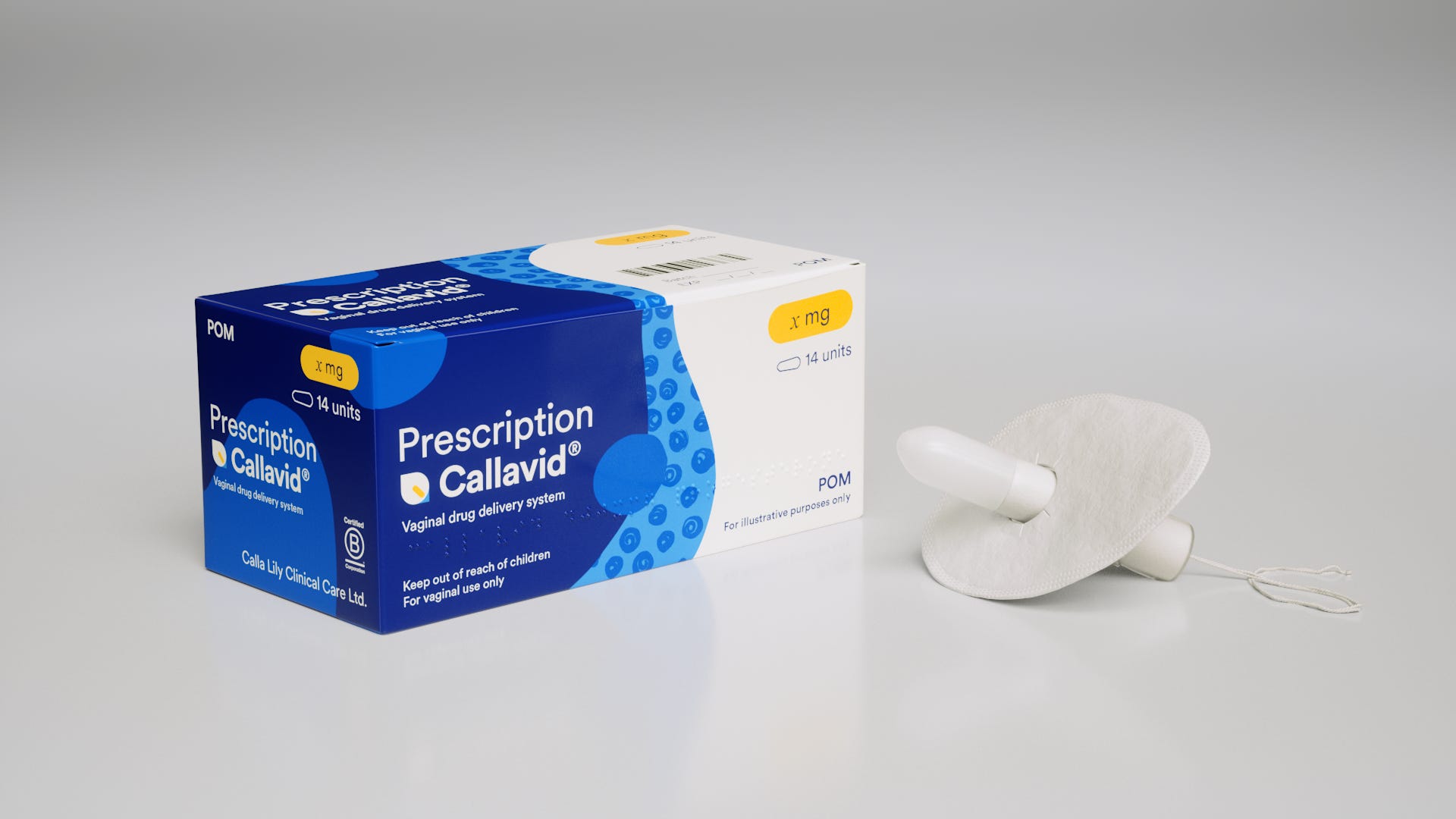
It’s easy to insert, stays in place while the drug is absorbed, and can be removed hygienically. No lying still, no stress, no guesswork.
The product is now entering clinical trials, backed by £1 million in funding from NIHR, the UK’s leading public funder for health and social care research.
“Vaginal progesterone leaks. Badly,” says co-founder Dr. Lara Zibners, who endured seven rounds of IVF herself. “Our device is designed to improve quality of life for women at one of the most distressing moments in their lives.”
The clinical feasibility study, led by Professor Siobhan Quenby MBE, will begin this autumn, with a pivotal bioequivalence trial planned for 2026.
👉 Link to the official press release

Why This Win Is Bigger Than One Device
This isn’t just about miscarriage care.
The same delivery technology could improve how progesterone is administered for IVF, hormone therapies, or other vaginal medications.
If successful, this will be the first drug-device combination approved in the UK for threatened miscarriage.

More broadly, NIHR’s decision to back a women’s health startup in early clinical development is a big deal.
It shows that meaningful innovation, especially in underfunded areas, is gaining traction at the institutional level.
What’s Clear From This
The Callavid® story shows that fixing how a drug is delivered can be just as critical as the drug itself, especially when that delivery affects comfort, dignity, and adherence.
In Femtech, the strongest innovations often come from lived experience combined with clinical evidence, as founders translate personal struggles into pragmatic solutions.
Public funding bodies like NIHR are increasingly willing to back women’s health technologies when the cost-saving and patient-impact case is clear.
Most importantly, empathy isn’t a nice-to-have in healthcare. It’s a competitive advantage.
What to Watch Next
Will Callavid® fast-track through MHRA approval?
Could this become standard protocol across IVF and miscarriage care?
Are we finally seeing a shift in how public institutions fund women’s health innovation?
Want More?
I send private briefings focused on education, market trends, and early-stage innovation in health designed to help you better understand the private investing landscape.
👉 Sign up here to join the investor memo list

Ways to Connect with FemmeHealth Ventures Alliance
Thanks for reading. If you liked what you read, consider:
signing up for FemmeHealth newsletter, which is published weekly
sending to a friend or co-worker

Disclaimer & Disclosure
This content is for informational and educational purposes only. It does not constitute financial, investment, legal, or medical advice, or an offer to buy or sell any securities. Opinions expressed are those of the author and may not reflect the views of affiliated organisations. Readers should seek professional advice tailored to their individual circumstances before making investment decisions. Investing involves risk, including potential loss of principal. Past performance does not guarantee future results.